

“I eat pretty healthy, I just can’t get enough protein.”
I hear some version of that line almost every week. Usually it comes right after a client walks me through their day: coffee for breakfast, a salad at lunch, and a chicken breast the size of a deck of cards at 7 p.m.
Here’s the thing. You don’t have a willpower problem. You have a logistics problem. And logistics problems have simple fixes.
The short answer: The easiest ways to get more protein are to build each meal around a protein source, aim for 30–40 grams per meal, use a third-party tested protein powder to fill gaps, and swap in higher-protein versions of foods you already eat. Think Greek yogurt instead of regular, lentils instead of white rice, egg whites mixed into your oatmeal. Small swaps, repeated daily, add up to 40–60 extra grams without a single “diet.”
Why protein matters (in plain English)
Think of your body as a job site that never closes. Every day, the crew tears down a little old muscle and builds a little new muscle. Protein is the lumber. Training is the work order. Without enough lumber on site, the crew just stands around.
Two details make this matter even more:
- Your muscles respond to doses, not daily totals alone. Each meal needs enough protein to flip the “build” switch. Roughly 30–40 grams does it for most adults.
- That switch gets stickier with age. Researchers call it anabolic resistance. As we get older, we need more protein per meal to get the same building response. That’s not your body breaking down. It’s just a reason to feed it better.
A practical daily target: 0.7–1.0 grams per pound of lean body mass. A large 2018 meta-analysis of 49 studies found muscle gains from resistance training leveled off around 1.6 g/kg of bodyweight per day (about 0.7 g per pound). More than that isn’t harmful for healthy adults. It just stops buying you extra muscle.
So how do you actually get there without living on chicken and broccoli? Let’s dive under the hood.
10 Easy Ways to Get More Protein
Protein amounts below are approximate. Labels vary by brand, so check yours.
1. Start with a third-party tested protein powder
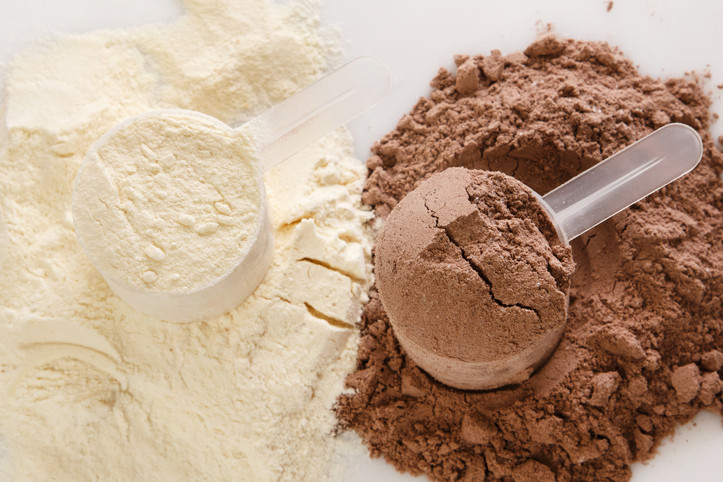
This is the lowest-effort win on the list. One scoop gives you 20–30 grams in about 45 seconds, no cooking required.
Drop the dogma that powder is “cheating.” It’s food in a convenient form. In a 2018 meta-analysis of 49 trials and 1,863 people, protein supplements boosted strength and muscle gains from lifting. Not magic. Just more lumber on the job site.
The catch: supplements are loosely regulated. When researchers tested 634 supplements from 13 countries, about 15% contained steroids that weren’t on the label. So look for a third-party seal like NSF Certified for Sport, Informed Sport, or USP Verified. That seal means someone independent checked what’s actually in the tub.
Try it: Whey or a soy/pea blend in your smoothie, oatmeal, or a mid-afternoon shake. No time to mix anything? Keep ready-to-drink shakes on hand. Fairlife Core Power (26 g or 42 g per bottle) is a client favorite. Toss one in your gym bag, desk drawer, or car cooler and you’ve got a protein hit that needs zero prep.
2. Build every meal around the protein
Most people plan meals backward. They pick the pasta, then wonder where the protein fits. Flip it. Pick your protein first, then add the rest.
Aim for 30–40 grams per meal. In a 2014 study in the Journal of Nutrition, adults who ate about 30 grams at each of three meals had 25% higher muscle protein synthesis over 24 hours. The other group ate the same total protein, just crammed most of it into dinner. Same food, better results, just by spreading it out.
Try it: If a meal’s protein is on the lighter side (a veggie stir-fry, a pasta night), close the gap with a shake or a side of Greek yogurt.
3. Fix breakfast first

Breakfast is where most people’s protein goes to die. Coffee, a bagel, maybe a banana. That’s about 10 grams, if you’re lucky.
A 2013 study in the American Journal of Clinical Nutrition compared a 35-gram protein breakfast against a cereal breakfast with the same calories. The higher-protein group felt fuller through the day and snacked less on high-fat foods that evening. Translation: protein in the morning makes the 9 p.m. pantry raid easier to skip.
Try it: Eggs plus egg whites, Greek yogurt with berries, or overnight oats made with milk and a scoop of protein.
4. Eat your protein first
Simple rule: when the plate hits the table, start with the protein and veggies. Save the bread and rice for last.
You’re less likely to fill up on the easy carbs before you get to the good stuff. There’s a bonus, too. In a small 2015 study in Diabetes Care, eating protein and vegetables before carbs led to noticeably lower blood sugar after the meal. Same meal, different order.
Try it: Chicken and salad first, then the roll. No foods are off limits. You’re just changing the sequence.
5. Choose leaner meat and dairy
Leaner cuts give you more protein per calorie. That matters if you’re trying to lose fat, or just don’t want to blow your calorie budget to hit your protein target.
Quick math (raw, 4 oz): 95% lean ground beef has about 24 grams of protein and 155 calories. 80/20 has about 19 grams and 290 calories. More protein, nearly half the calories.
This matters most when you’re eating less. A 2012 meta-analysis of 24 trials found that higher-protein diets during weight loss helped people keep more lean mass and lose more fat. You want the scale to drop because of fat, not muscle.
Try it: Chicken breast, 93–95% lean ground meat, pork tenderloin, fish, shrimp, skim or 1% milk, and nonfat Greek yogurt.
6. Sneak in egg whites, cottage cheese, and Greek yogurt

These three are the utility players of high-protein eating. They hide in food you already make.
- Egg whites: Whisk ½ cup (about 13 g) into oatmeal while it cooks. It turns fluffy, not eggy.
- Cottage cheese: Blend a cup (about 25 g) into pasta sauce, scrambled eggs, or pancake batter. Smooth and creamy, no lumps.
- Greek yogurt: Swap it 1:1 for sour cream or mayo in tacos, dips, and dressings. A cup of nonfat runs about 20–23 g.
The dairy options have a bonus at night. They’re rich in casein, a slow-digesting protein. In a 2015 study of 44 young men on a 12-week lifting program, a casein shake before bed led to bigger gains in strength and muscle than a placebo. A bowl of cottage cheese before bed does a similar job.
7. Choose higher-protein carbs
Not all carbs are created equal when it comes to protein. Some pull double duty.
| Swap this | For this | Protein (per cooked cup, approx.) |
|---|---|---|
| White rice | Lentils | ~18 g vs ~4 g |
| Regular pasta | Chickpea or lentil pasta | ~20 g vs ~8 g (per 2 oz dry) |
| White rice | Quinoa | ~8 g vs ~4 g |
| Sugary cereal | Oatmeal made with milk | ~12 g vs ~2–3 g |
Beans and lentils also keep you full. A 2014 meta-analysis found people felt 31% fuller after eating pulses (beans, peas, chickpeas, lentils) than after comparable meals without them.
8. Sprinkle on the extras
Think of these as protein confetti. Each one adds only a few grams, but stack two or three on a salad or bowl and you’ve added 10–15 grams without trying.
- Edamame: ~18 g per shelled cup
- Hemp hearts: ~10 g per 3 tbsp
- Nutritional yeast: ~5–8 g per serving, depending on brand, with a cheesy, savory flavor
- Pumpkin seeds: ~8 g per oz
- Shaved or slivered almonds: ~6 g per oz
- Ground flax: ~3 g per 2 tbsp
If you lean plant-based, don’t sweat it. A 2018 meta-analysis of 9 trials found soy protein built strength and muscle just as well as animal protein when paired with lifting.
9. Upgrade your snacks
The 3 p.m. snack is a protein opportunity hiding in plain sight. Swap the crackers for something that actually holds you over.
In a 2014 study, women who ate a high-protein yogurt as an afternoon snack felt less hungry than after a chocolate snack with the same calories. They also waited longer to eat dinner and ate less of it.
Try it: Greek yogurt cups, string cheese, jerky or meat sticks, tuna or salmon packets, roasted chickpeas, or a hard-boiled egg or two.
10. Batch-prep your protein once a week

Most protein misses aren’t about knowledge. They happen at 6:30 p.m. on a Tuesday when nothing is cooked and DoorDash is right there.
Solve it on Sunday.
Prep isn’t about cooking everything at once. It’s about getting every protein ready to go and planned out. Cook one or two in bulk, like a sheet pan of chicken thighs or a dozen hard-boiled eggs. Get the rest set up for the week: marinate salmon or flank steak in zip-top bags, portion lean ground turkey for taco night, or thaw tomorrow’s chicken in the fridge. Now “build the meal around the protein” takes five minutes.
In a study of more than 40,000 adults, people who planned meals ahead ate a more varied, higher-quality diet and were less likely to have obesity. That study shows a link, not proof of cause. But anyone who’s coached a busy parent knows the pattern is real.
What a 130-Gram Day Actually Looks Like
You don’t need all 10 at once. Pick two this week. Here’s what a few of them look like stacked together:
| Meal | What’s on the plate | Protein (approx.) |
|---|---|---|
| Breakfast | Overnight oats with milk, a scoop of protein, and hemp hearts | 35 g |
| Lunch | Big salad with batch-prepped chicken, edamame, and pumpkin seeds | 40 g |
| Snack | Greek yogurt cup and a string cheese | 22 g |
| Dinner | Chickpea pasta with lean ground turkey and cottage cheese blended into the sauce | 35 g |
| Total | ~132 g |
No weird foods. No “diet” meals. Just regular food with the protein moved to the front.
Your starter checklist
- Buy one third-party tested protein powder
- Get at least 30 g at breakfast
- Name the protein before you plan any meal
- Make one swap: lentils for rice, or Greek yogurt for sour cream
- Batch-prep your proteins this Sunday
Stop letting perfection be the enemy of progress. Two habits you keep beat ten you abandon by Thursday.
Frequently Asked Questions About Getting More Protein
How much protein do I need per day?
For most active adults, 0.7–1.0 grams per pound of lean body mass is a solid target. Research on people who lift found muscle gains leveled off around 1.6 g per kg of bodyweight per day, which is about 0.7 g per pound.
How much protein should I eat per meal?
Aim for 30–40 grams per meal. Spreading protein evenly across three meals builds more muscle than eating most of it at dinner. Older adults may benefit from the higher end of that range.
Is protein powder safe?
For healthy adults, yes. Protein powder is just food in a convenient form. Choose a product with a third-party seal such as NSF Certified for Sport, Informed Sport, or USP Verified, since supplements are not tightly regulated.
What are the easiest high-protein foods to add to my day?
Greek yogurt, cottage cheese, egg whites, lean meats, protein powder, lentils, and edamame. Most of them need little or no cooking and slot into meals you already eat.
Can I get enough protein on a plant-based diet?
Yes. Soy, lentils, beans, edamame, and seitan are all protein-dense. Research shows soy protein builds strength and muscle as well as animal protein when combined with resistance training.
Is a high-protein diet bad for my kidneys?
In healthy adults, higher protein intakes have not been shown to harm kidney function. If you have existing kidney disease, talk with your doctor before increasing protein.
The Bottom Line
Getting more protein isn’t about eating more chicken breast. It’s about logistics. Put protein first on the plate, first in the day, and first in your grocery cart. Let a good powder and a few smart swaps cover the gaps.
Do that consistently, and the protein takes care of itself. So does the muscle, the energy, and the strength to carry the groceries, the mulch, and the grandkids for decades to come.
If you’re in Fairfax County or Northern Virginia and want a coach to help you put this into practice alongside a training plan built for your life, book a free consult with NOVA Strong.